Changing careers can feel exciting, overwhelming and deeply uncertain — often all at the same time.
One of the biggest challenges many career changers face is not a lack of experience or transferable skills.
It is learning how to present themselves differently on paper.
Because a career-change CV is not simply about listing previous jobs.
It is about helping someone else understand:
- who you are now,
- where you are heading,
- and why your experience still holds significant value.
Unfortunately, many talented professionals unintentionally create CVs that:
- undersell their strengths,
- confuse employers,
- or focus too heavily on where they have been rather than where they want to go next.
Your CV Needs to Spark Interest Quickly
Recruiters and employers often make decisions surprisingly quickly.
Your CV does not need to tell your entire life story immediately.
Its first job is simpler:
to create enough interest for someone to want to keep reading.
A strong career-change CV should quickly communicate:
- clarity,
- professionalism,
- transferable value,
- and direction.
If an employer finishes reading your CV still confused about:
- what you want,
- what you offer,
- or where you fit,
then even impressive experience can become diluted.
One of the Biggest Mistakes Career Changers Make
Many career changers focus too heavily on:
- responsibilities,
- tasks,
- and job descriptions.
But employers are usually more interested in:
- impact,
- strengths,
- achievements,
- communication,
- leadership,
- problem-solving,
- adaptability,
- and results.
This is especially important for teachers, leaders and professionals leaving specialist sectors.
You may have developed incredibly valuable transferable skills without fully recognising them yourself.
Skills such as:
- communication,
- organisation,
- resilience,
- stakeholder management,
- leadership,
- conflict resolution,
- coaching,
- public speaking,
- data analysis,
- strategic thinking,
- and project management
are highly valuable across many industries.
Your CV should help employers see those strengths clearly.
A Career-Change CV Requires Strategy
One common misconception is that career-change CVs simply need:
“a few tweaks.”
Often, they require a significant shift in emphasis and presentation.
A strong career-change CV should:
- focus on transferable strengths,
- align with the roles you are targeting,
- reduce unnecessary jargon,
- and communicate relevance quickly.
In many cases, simplifying language can dramatically improve clarity.
Specialist terminology that makes perfect sense within one profession may mean very little to employers outside that sector.
Avoid These Common CV Mistakes
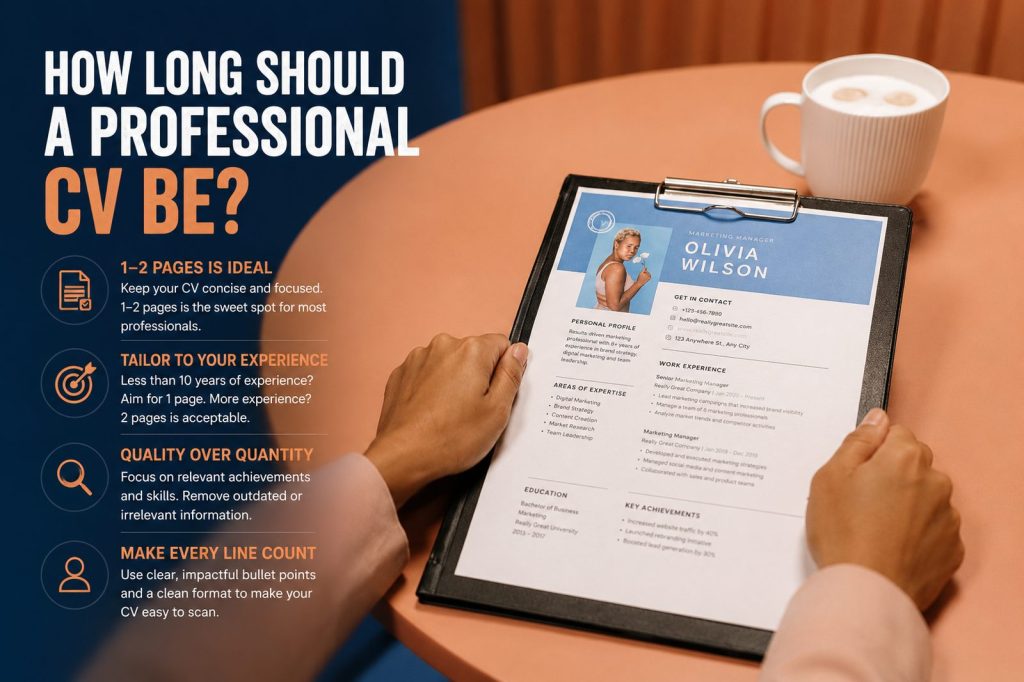
1. Writing Too Much
Trying to include absolutely everything often weakens impact.
Prioritise:
- relevance,
- clarity,
- and quality over quantity.
A concise and well-structured CV is usually far more effective than an overloaded document.
2. Focusing Only on Duties
Listing responsibilities alone rarely creates strong engagement.
Instead, show:
- achievements,
- outcomes,
- improvements,
- leadership,
- initiative,
- and measurable impact wherever possible.
3. Using Generic Language
Phrases such as:
- “hard-working”
- “team player”
- “good communicator”
mean very little without evidence.
Strong CVs demonstrate value through examples rather than vague descriptions.
4. Applying With the Same CV Every Time
Different roles require different emphasis.
Tailoring your CV for specific opportunities can significantly improve your chances of securing interviews.
Your CV Should Reflect Where You Are Going
One of the biggest mindset shifts during career change is understanding that your CV should not simply document your past.
It should help position your future.
This means:
- highlighting relevant strengths,
- reducing distractions,
- aligning with your target direction,
- and presenting yourself with greater clarity and confidence.
Sometimes people underestimate how difficult it can be to write objectively about themselves — especially during periods of uncertainty or transition.
That is completely normal.
Confidence Matters Too
Interestingly, one of the biggest transformations many people experience during professional CV support is not simply ending up with a stronger document.
It is seeing their own experience differently.
Career change can gradually erode confidence.
People begin questioning:
- their value,
- their experience,
- and what they realistically have to offer.
A strong CV can help rebuild clarity and perspective by reminding you just how much transferable experience you already possess.
Final Thoughts
Career change rarely begins with complete certainty.
But a strong CV can help create:
- momentum,
- confidence,
- clarity,
- and opportunity.
Because often, the hardest part is not lacking potential.
It is learning how to communicate that potential in a way others immediately recognise.
And sometimes, a few thoughtful changes in how you present yourself can open doors you previously believed were out of reach.